Table of Content
In March 2004, the European Commission fined Microsoft €497 million (£395 million or $784 million) and ordered the company to provide a version of Windows without Windows Media Player. The Commission concluded that Microsoft "broke European Union competition law by leveraging its near monopoly in the market for PC operating systems onto the markets for work group server operating systems and for media players". Consumer interest has been low, with roughly 1,500 units shipped to OEMs, and no reported sales to consumers.

This is possible as long as the upgrading hardware meets the minimum requirements for Windows 11. Despite extended support for Windows XP ending in 2014, many users – including some enterprises – were reluctant to move away from an operating system they viewed as a stable known quantity despite the many security and functionality improvements in subsequent releases of Windows. Windows XP's longevity was viewed as testament to its stability and Microsoft's successful attempts to keep it up to date, but also as an indictment of its direct successor's perceived failings. Microsoft released the first public beta build of Whistler, build 2296, on October 31, 2000. Subsequent builds gradually introduced features that users of the release version of Windows XP would recognize, such as Internet Explorer 6.0, the Microsoft Product Activation system and the Bliss desktop background.
Windows XP Media Center Edition
This article contains a complete list of all Microsoft Windows Versions and the date of release. MiniTool Partition Wizard allows you perform various partition and disk related operations. It is often recommended to create a bootable USB/CD/DVD in case of unbooting situations. If things happen, boot your computer with the bootable media and then fix issues with this partition managing tool. This post of MiniTool would introduce Windows XP briefly and then show you how to download Windows XP ISO (32 &64 bit).
Windows XP is remotely exploitable by numerous security holes that were discovered after Microsoft stopped supporting it. As a result of unfair competition lawsuits in Europe and South Korea, which both alleged that Microsoft had improperly leveraged its status in the PC market to favor its own bundled software, Microsoft was ordered to release special editions of XP in these markets that excluded certain applications. In March 2004, after the European Commission fined Microsoft €497 million (US$603 million), Microsoft was ordered to release "N" editions of XP that excluded Windows Media Player, encouraging users to pick and download their own media player software. As it was sold at the same price as the edition with Windows Media Player included, certain OEMs (such as Dell, who offered it for a short period, along with Hewlett-Packard, Lenovo and Fujitsu Siemens) chose not to offer it. Consumer interest was minuscule, with roughly 1,500 units shipped to OEMs, and no reported sales to consumers. In December 2005, the Korean Fair Trade Commission ordered Microsoft to make available editions of Windows XP and Windows Server 2003 that do not contain Windows Media Player or Windows Messenger.
Home and Professional
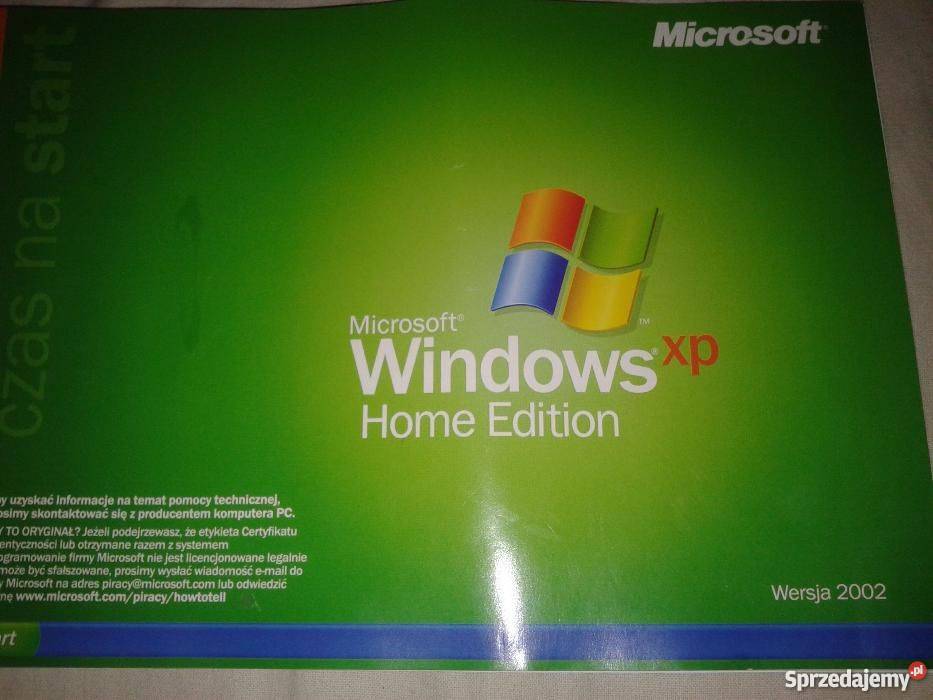
On the same day, Microsoft also announced the final retail pricing of XP's two main editions, "Home" and "Professional" (as a replacement for Windows 2000 for high-end users). Upon its release, Windows XP received critical acclaim, noting increased performance and stability , a more intuitive user interface, improved hardware support, and expanded multimedia capabilities. Windows XP and Windows Server 2003 were succeeded by Windows Vista and Windows Server 2008, released in 2007 and 2008, respectively. Development of Windows XP began in the late 1990s under the codename "Neptune", built on the Windows NT kernel explicitly intended for mainstream consumer use.
You can install XP on only one machine; piddling discounts for additional PC licenses; nags you to sign up for Passport Web account; Home Edition's multiple-user login screens are often redundant; heavy system requirements. Extended support ended on April 9, 2019Support for the original release of Windows XP ended on August 30, 2005. Both Windows XP Service Pack 1 and 1a were retired on October 10, 2006, and both Windows 2000 and Windows XP SP2 reached their end of support on July 13, 2010, about 24 months after the launch of Windows XP Service Pack 3.
Upgradeability
The original version also lacks most media applications, such as Windows Media Player, NetMeeting, Windows Movie Maker, and integrated CD burning, although Windows Media Player and NetMeeting were added in the 2003 version. Windows XP Tablet PC Edition 2005 – The Tablet PC version released in August as part of Windows XP Service Pack 2. The 2005 edition is available as a service pack upgrade, or as a new OEM version.

It also did not include Internet Explorer 8, but instead was included in Windows 7, which was released one year after XP SP3. Like any radical overhaul, XP takes some getting used to--we often lost patience with it--but, after time, it's hard not to like the new design. While its new, hand-holding "task-oriented" design may annoy experienced users, Microsoft nevertheless managed to create an OS that works equally well for novices, corporate users, and enthusiasts. Despite hefty system requirements (a Pentium II-300 or faster, 128MB of RAM, and 1.5GB of free disk space), onerous product activation, and some not-so-obvious touting of Microsoft's business partners, you'll want to consider an upgrade--if not immediately, certainly the next time you buy a PC. Similarly, specialized devices that run XP, particularly medical devices, must have any revisions to their software—even security updates for the underlying operating system—approved by relevant regulators before they can be released. For this reason, manufacturers often did not allow any updates to devices' operating systems, leaving them open to security exploits and malware.
Subscription and pre-paid editions
Windows XP Media Center Edition (codenamed "Freestyle") was the original version of Windows XP Media Center, which was built from the Windows XP Service Pack 1 codebase. It was first announced on July 16, 2002, released to manufacturing on September 3, 2002 and was first generally available on October 29, 2002 in North America. Windows XP Media Center Edition has had the following releases, all based on Windows XP Professional with all features enabled except domain-joining ability disabled in Windows XP Media Center Edition 2005 and Terminal Services in the original release.

This edition was discontinued in January 2005, after Hewlett-Packard, the last distributor of Itanium-based workstations, stopped selling Itanium systems marketed as 'workstations'. As of July 2005, Windows XP 64-Bit Edition is no longer supported, and no further security updates were made available. Both editions contain additional components that enforce the subscription models via metering. The metering is typically enforced with a hardware component to prevent tampering. The installation of Windows operates in "normal mode", "Limited Access Mode", or "Hardware Locked Mode" depending on the state of the subscription. When a computer has a positive time balance, it operates in "normal mode" and functions as a regular Windows XP Home Edition machine.
When the time balance expires, the machine will then operate in "Limited Access Mode" for an amount of time set by the hardware manufacturer before entering "Hardware Locked Mode". In Limited Access Mode, the screen uses high-contrast and low-resolution display settings, and in Hardware Locked Mode, the operating system is disabled entirely, and a message is displayed on boot-up with instructions on how to re-enable the machine. Speech recognition functionality is also incorporated into the Tablet Input Panel. Compared to previous versions, a substantially improved speech recognition engine version 6 and a tutorial, microphone wizard and training modules are included.
This version brought improved handwriting recognition and improved the Input Panel, allowing it to be used in almost every application. The Input Panel was also revised to extend speech recognition services to other applications. Tablet PC Edition is a superset of Windows XP Professional, the difference being tablet functionality, including alternate text input and basic drivers for support of tablet PC specific hardware. Requirements to install Tablet PC Edition include a tablet digitizer or touchscreen device, and hardware control buttons including a Ctrl-Alt-Delete shortcut button, scrolling buttons, and at least one user-configurable application button. Windows XP Media Center Edition ("Freestyle", July 2002) This was the original release. This release combined with updates is sometimes referred to as Windows XP Media Center Edition 2003.


No comments:
Post a Comment